Windows Server 2016 - The Second Wave
The Second Wave — Windows Server 2016 and Why "January 2027" is Already 'Now'
The Windows Server 2012 story has run in every board room in the sector this year. The Server 2016 story hasn't. That's the mistake.
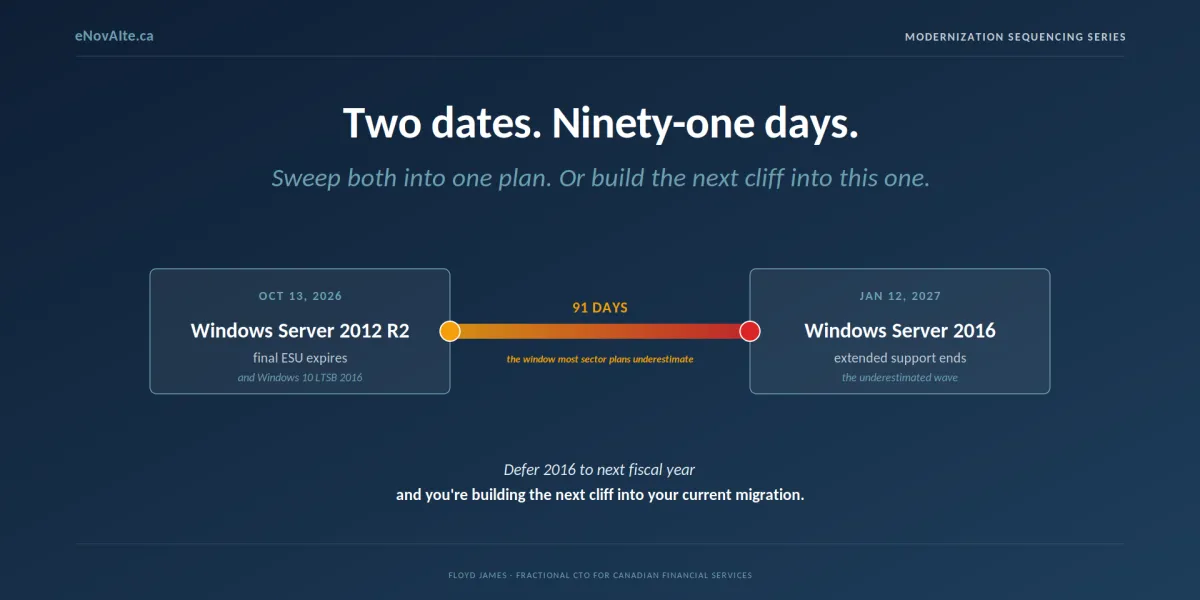
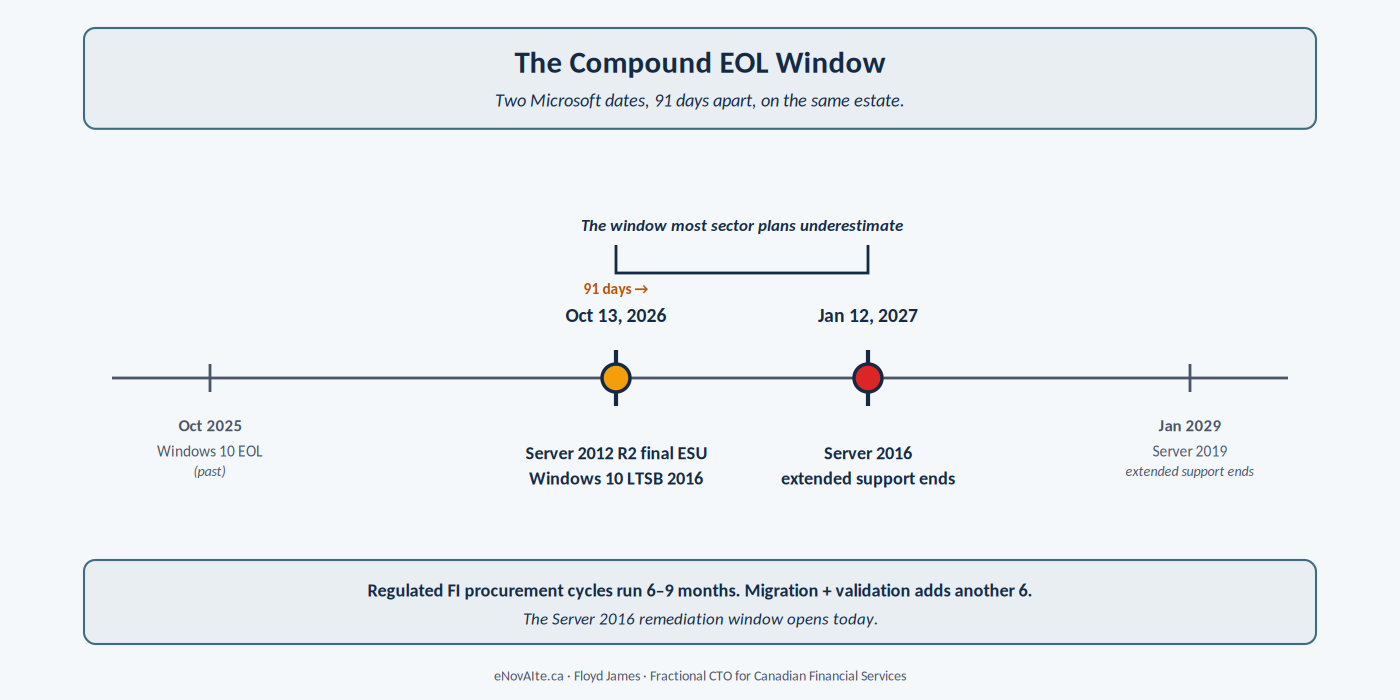
Server 2012 R2 final ESU expires October 13, 2026. Windows 10 LTSB 2016 ends the same day. Server 2016 extended support ends January 12, 2027. That's a 91-day gap between two dates that land on the same estate.
The mental model that stalls remediation programs
"We survived 2012, we can worry about 2016 next year." I've heard some version of that from so many IT teams facing this dilemma. It sounds prudent. It isn't.
Regulated FI procurement cycles run 6 to 9 months. Migration and validation add another 6. Do the math against January 12, 2027 and the Server 2016 remediation window opens today for anyone who hasn't already scoped it.
There's a second problem underneath. Many CUs are finishing 2012 remediation with Server 2016 as the interim target. That may seem to work technically. It fails in 15 months. Unless the plan sequences 2012 and 2016 together, you're building the next cliff into the migration itself.
Two FSRA-touching realities
1.IT Risk Management Guidance under the SBFP Rule expects current platforms. Cumulative aging is not cured by one migration cycle. Regulators see composition, not effort.
2.RBSF-CU Operational Risk domain scoring reflects your platform estate mix, not the presence of a plan. Two remediation cycles in twelve months still score better than one done and one deferred.
This isn't only a credit union problem. Every regulated FI in Canada is watching the same two dates. The differentiator isn't awareness. It's execution.
What good looks like
•A single 12-month remediation plan that addresses 2012 and 2016 assets in one pass, not two
•Migration sequenced by regulatory-touch surface, not by asset age
•Server 2016 hosts never used as interim landing spots for 2012 workloads mid-migration
•An asset register showing target-state per host, not just migration dates
Ask at your next Audit Committee: "Does our remediation plan address Server 2016 in parallel with 2012, or in series?" If series, you're already behind.
This is Part 1 of a three-part series on modernization sequencing. Part 2: which workload lands where. Part 3: what to do if it can't move in time.
Sources: Microsoft Learn — Extended Security Updates overview; Microsoft Tech Community — Windows Server 2016 and Windows 10 2016 LTSB end-of-support planning; FSRA IT Risk Management Guidance under the SBFP Rule.
#CreditUnions #ITRisk #FSRA #WindowsServer2016 #FinancialServices #VP-IT #CIO
Brief Glossary of Terms:
RBSF-CU:Risk-Based Supervisory Framework for Credit Unions
SBFP : Rule 2021- 001 - Sound Business and Financial Practices
Know your risks. Download our free Self-assessment guide here: